


Unlike the developed countries where it is commonly used as a legal tool, a restraining order is still a rarely used word in India. We are getting more and more aware about this powerful legal practice and hence we have decided to decode ‘Restraining order and how to obtain it’ for you with the help of this article.
What is a Restraining Order?
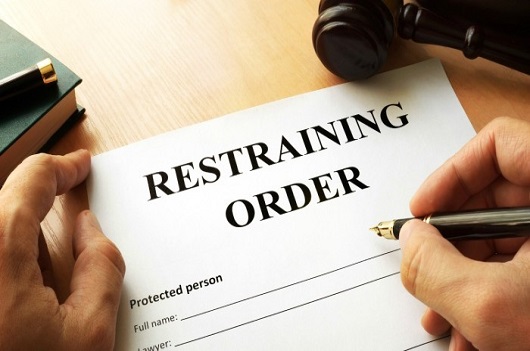
A restraining order is also commonly referred to as an injunction in the Indian judicial system. A restraining order can be simply explained as a legal order which refrains a person from taking a particular action or from approaching a particular person. It can be used as a legal remedy when someone thinks that they are in danger owing to someone’s actions or feel threatened by someone.
Depending upon the nature of the harassment or situation, the court may issue injunction from the two types which are:
- Temporary Injunction- This is the type of injunction which is issued for a limited time or until the final court order.
- Perpetual Injunction- As the name suggests, the perpetual injunction is issued by the final decree of the court where a person is barred or restrained from doing things specified by the court for an indefinite time.
The nature of the injunction may be either of the following types:
- Prohibitive
- Restrictive
- Preventive
- Mandatory
How is it issued?
If one wishes to obtain the restraining order also referred to as injunction order, they need to file an application through a civil lawyer in front of the respective court or tribunal where the hearing of the matter happens.
In order for the court to issue a perpetual injunction, there are certain conditions that needs to be met as specified in Section 38 of the Special Relief Act, 1963. We have listed them below:
- Perpetual Injunction can be issued to avoid a breach of an obligation.
- Perpetual injunction can be issued when an obligation arises from a contract.
- Perpetual Injunction can be issued when someone is trying to invade a property and it may result in multiple judicial proceedings or where the defendant is a trustee of the property for the plaintiff or where there are no standards for ascertaining the actual damage caused.
- Perpetual Injunction can be issued in case of domestic violence cases where the victim feels threatened by the actions of the accused.
- Perpetual Injunction can be issued where the victim is harassed by the accused.
We hope this article throws light on the procedure to obtain an injunction or restraining order and the situations in which it can be obtained.
The easiest way to keep yourself updated on critical legal queries like these and many more is to sign up to EasyAdvocacy today.
Also, like us on Facebook and follow us on Twitter, LinkedIn and Google+ to keep up to date with all things related to legal matters.