

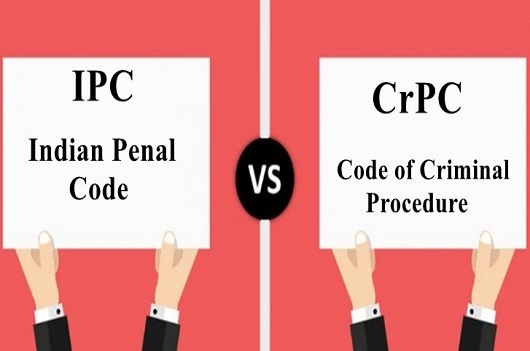

As citizens of India, it is not just important to know about the law of our country but it can be said that it is also our duty to be well versed with them. Not knowing the law of the country does not stand as an argument in the court of law. So what is the Indian Penal Code, 1860 (IPC) and the Code of Criminal Procedure, 1973 (CrPC) and what is the difference between the two? Read on to know more.
Before we get discussing the key differences between IPC and CrPC, it is essential to talk about them in the individual light.
What is the Indian Penal Code, 1860?
The Indian Penal Code, most popularly referred to as IPC was established in the year 1860. It is also regarded as the main criminal code of India which covers all the substantial elements of the criminal law. The origin of IPC dates back to 1834 when the first law commission had recommended for it to be found. It is also called the general penal code of India and extends to the whole of India except the state of Jammu & Kashmir. It comprises of total twenty-three chapters and 511 sections overall. It has been amended over 75 times up till now. It is interesting to note that the Indian Penal Code is also said to be cogently drafted which has been able to survive major jurisdictions without major amendments, which proves that it indeed was ahead of its time.
What is the Code of Criminal Procedure, 1973?
Enacted in 1973, the Code of Criminal Procedure first came into force in 1974. The Code of Criminal Procedure can be described as the machinery which provides a mechanism for the main criminal law which is IPC. It details the procedure for:-
- Investigation of crime.
- Treatment of the suspects.
- Evidence collection process.
- Determining whether the accused is guilty or innocent.
In addition to the above, CrPC also deals with the prevention of crime, family maintenance, public nuisance etc.
The Code of Criminal Procedure, 1973 has undergone over 17 amendments. The Supreme Court, High Court, various level magistrates and police are the law enforcing bodies which function under the Code of Criminal Procedure, 1973.
Key Differences between IPC and CrPC
From the above definition and information related to both IPC and CrPC, we can draw the following points as the key differences between the two:-
- While IPC is the fundamental criminal law which is enforced in the country, CrPC denotes the procedure that needs to be followed in terms of a criminal case.
- While IPC is a substantive law by nature, CrPC can be termed as being procedural in nature.
- While IPC is regarded as the general penal code, the CrPC consolidates the general penal code.
- CrPC also has the guidelines for the court developments and power of the judges which the IPC does not.
- IPC is a comprehensive code that lists down crimes and punishments for them while CrPC lists down the procedure to enact them.
Â
The easiest way to keep yourself updated on critical legal queries like these and many more is to sign up to EasyAdvocacy today.
Also, like us on Facebook and follow us on Twitter, LinkedIn and Google+ to keep up to date with all things related to legal matters.